Best B2B eCommerce Platforms for US Businesses in 2026
If you sell to other businesses, you already know that finding the best B2B ecommerce platforms takes more than reading a top ten list. Most best of roundups read like copies of each other. This one skips the fluff. It digs into what actually separates a platform that scales from one that turns into a rebuild project 18 months later.
So, What’s Actually the Best B2B Platform?
Honestly, it depends. A hybrid B2C/B2B brand needs something different from a pure play distributor managing 400 accounts with custom pricing.
Still, a few patterns hold up. Shopify Plus and BigCommerce B2B Edition work well for mid market companies. Adobe Commerce and Salesforce B2B Commerce make sense once your catalog and integrations grow complex. If you want B2B tools without B2C clutter, OroCommerce deserves a look.
Before you pick a name off a list, understand what separates true B2B software from a consumer store with a few extras bolted on.
What Makes a Platform “B2B” Really?
Most ecommerce software serves consumers who swipe a card and check out in two minutes. B2B buying works differently.
A purchasing manager often needs net 30 terms. They might need a manager’s sign off before checkout, plus pricing that looks nothing like the account next door. That’s a different problem, and it calls for different software.
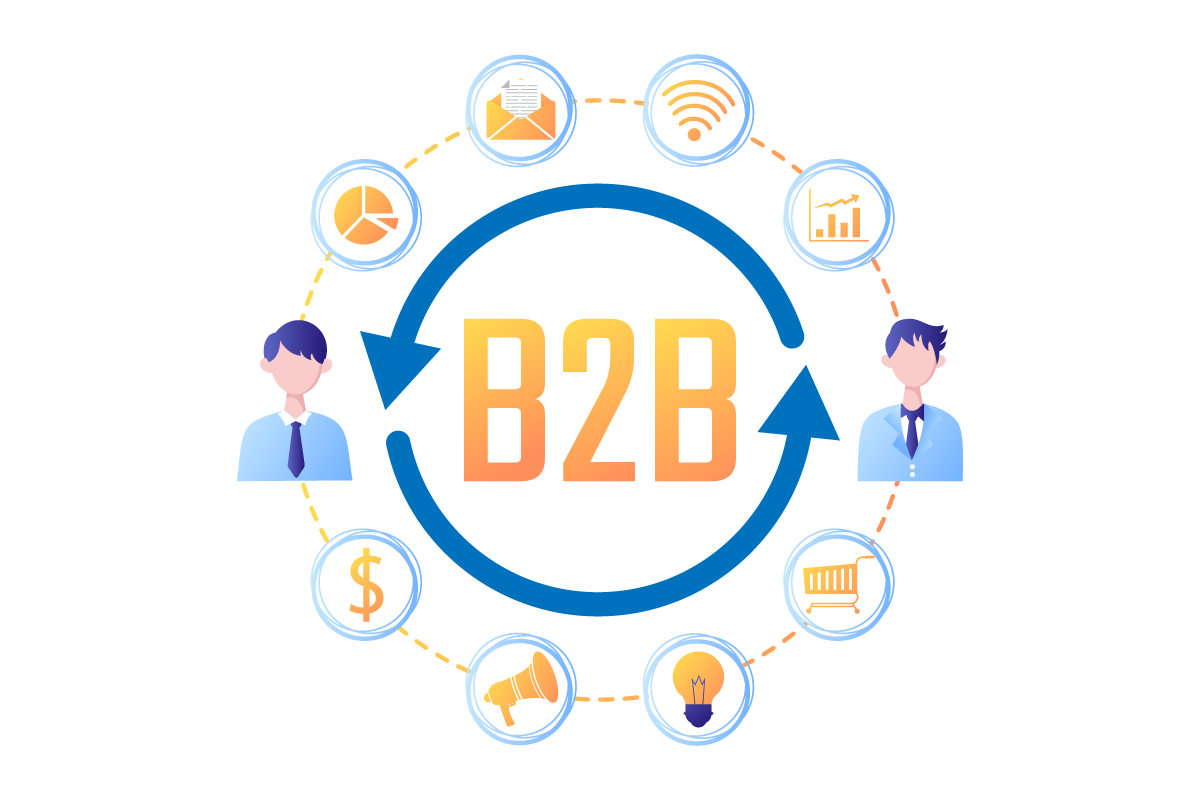
A true B2B ecommerce platform handles:
- Account hierarchies, so several buyers sit under one company profile with different permissions
- Customer specific pricing that changes by account, region, or order volume
- Fast reordering, whether from purchase history, a CSV upload, or a punchout catalog
- Quote and RFQ workflows for pricing outside the standard catalog
- Approval chains, where a junior buyer’s cart needs sign off before it becomes a real order
- Payment terms beyond a credit card, including net 30, purchase orders, or ACH
- Integration with whatever ERP or CRM already runs your business
Skip most of this list, and your team bolts on workarounds within a year. Those workarounds always cost more than doing it right the first time.
What to Actually Look For in a B2B eCommerce Solution
Plenty of companies fall for demo features that never matter once the platform goes live. Before you sign anything, check these instead.
Total cost of ownership. The monthly subscription often sits at the bottom of the invoice. Implementation and ongoing maintenance usually cost more than the license itself.
How composable the platform is. Can your team swap checkout or search without tearing down the whole build? Headless commerce gives you that flexibility, but only with developers who can maintain it.
Built in AI features. Predictive reordering and personalized search used to belong to enterprise budgets only. Mid market platforms now offer them too, so ask what’s standard versus what costs extra.
Security certifications. SOC 2 and PCI DSS Level 1 matter once you handle real payment volume. Ask for proof, not just a checkbox answer.
Comparing the Top B2B eCommerce Platforms for 2026
| Platform | Best For | Starting Cost | Notable Strength |
|---|---|---|---|
| Shopify Plus | Hybrid B2B/B2C brands, fast growing mid market | Around $2,300/month | Fast to launch, huge app ecosystem |
| BigCommerce B2B Edition | Distributors and manufacturers wanting headless flexibility | Roughly $3K to $8K/month | Account based pricing built in |
| Adobe Commerce (Magento) | Large enterprises with complex catalogs | Often $18K+/month | Deep customization |
| Salesforce B2B Commerce | Companies already on Salesforce CRM | Custom quote | Native CRM tie in, Einstein AI |
| OroCommerce | Businesses wanting B2B only tooling | Custom quote | RFQ workflows, no B2C clutter |
| WooCommerce (with B2B plugins) | Small businesses on WordPress | Free core plus hosting and plugins | Low cost, full control |
Treat these numbers as a starting point, not a final quote. Get a current number before you build a budget.
Shopify Plus
Shopify Plus has grown into a real B2B platform, not a B2C tool with extras tacked on. It ships company profiles, custom price lists, and payment terms out of the box.
It can still fall short on highly specific workflows, like multi tier approval chains. Those sometimes need an app or a custom build. Choose Shopify Plus if you sell to both consumers and businesses through one storefront, or want to move fast without a large dev team.
BigCommerce B2B Edition
BigCommerce built this edition specifically for distributors and manufacturers. It includes account pricing, quote requests, and shopping lists from day one.
Its open API also makes headless setups far less painful than on many competing platforms. Consider it a solid middle ground if Adobe or Salesforce pricing gives you pause.
Adobe Commerce (formerly Magento)
Enterprises with massive, complicated catalogs still default to Adobe Commerce. That makes sense once you reach tens of thousands of SKUs across multiple storefronts.
However, it also tends to become a maintenance headache. Too many companies pick it because everyone calls it the enterprise standard.
They then struggle once the implementation agency’s contract ends and nobody in house can touch the customizations. If you choose this route, match your technical team to the platform, not just your budget.
Salesforce B2B Commerce
This platform makes the most sense once your sales team already lives inside Salesforce. Customer data, order history, and support cases stay in one place.
Einstein AI also powers recommendations and search using data you already collected.
OroCommerce
OroCommerce built its platform for B2B from day one. Nothing here feels bolted on.
RFQs, multi site management, and complex pricing rules all come native. It stands out as a strong open source option if you want serious B2B depth without Adobe or Salesforce level spend.
What About Small Businesses?
Enterprise suites overwhelm most small B2B sellers, and the price tag alone rules them out. More realistic paths exist, though.
Try WooCommerce with a B2B plugin, such as B2BKing or Wholesale Suite, if you already run WordPress and want low cost with full control. Or layer a B2B app onto standard Shopify, not Plus. BigCommerce’s standard plans also cover basic B2B needs before you need the dedicated B2B Edition.
Buy for where your business stands now, not where you hope it lands in three years. Overbuying ranks among the most common, and most expensive, mistakes small businesses make here.
A Quick Framework for Choosing B2B eCommerce Software
Instead of asking “what’s the best platform,” ask these questions first:
- How complex is your ordering today, and where will it stand in 18 months?
- What already runs your business? Native ERP or CRM integration matters more than most feature comparisons.
- Do you actually have developers who can maintain a customized or headless setup?
- Do you sell to businesses only, or to both businesses and consumers?
- Once you add implementation and year one maintenance, what does the real budget look like?
Answer these first, then compare vendors. You’ll cut your shortlist down fast.
Mistakes to Avoid When Picking a Platform
- Picking a platform because you recognize the name, without checking if it fits your size
- Underestimating how long enterprise implementations take; six to twelve months counts as normal, not a red flag
- Treating ERP integration as an afterthought, even though it often costs as much as the platform itself
- Skipping a real pilot test with actual customer pricing and approval scenarios before going live
Avoid these traps, and you save your team months of frustration later.
A Few Things That Actually Help
- Ask vendors for a sandbox, then test your real pricing rules and approval chains before you sign anything
- Push past the demo script; vendor demos hide edge cases by design
- Request references from businesses your size, not just the vendor’s biggest logo client
- Budget for ongoing platform management as its own line item, since someone needs to own it after launch
- If you run hybrid B2B and B2C sales, confirm the platform shows different pricing to logged in accounts versus anonymous shoppers
Need Help Choosing or Implementing a B2B eCommerce Platform?
Picking the platform is the easy part. Implementation, ERP integration, and keeping everything running well over time is where most projects go sideways.
Prismatic Technologies helps growing businesses evaluate, implement, and optimize B2B ecommerce platforms that fit their catalog size, budget, and existing systems. Reach out, and we’ll help you build a shortlist that fits your business, not just your budget.
FAQs
What’s the best ecommerce platform overall?
It depends on your business. Shopify and BigCommerce suit most small to mid market sellers. Adobe Commerce and Salesforce suit larger, complex operations.
Which platform works best for a small business?
WooCommerce with B2B plugins, or a standard Shopify plan. Both offer low cost and enough functionality to start.
What are the biggest ecommerce platforms?
Shopify, Adobe Commerce, BigCommerce, Salesforce Commerce Cloud, and SAP Commerce Cloud lead the market.
Is Shopify actually good for B2B?
Yes. Shopify Plus now includes native company accounts, custom pricing, and payment terms.
How much does a B2B ecommerce platform cost?
Mid market platforms run a few thousand dollars a month. Enterprise suites can hit five or six figures monthly once you include implementation.
Do I need a B2B specific ecommerce platform?
If you need custom pricing, approvals, or bulk ordering, yes. A dedicated platform saves significant development time compared to retrofitting a standard store.
How long does implementation take?
A few weeks to a couple months for Shopify or WooCommerce. Six to twelve months for Adobe Commerce or Salesforce.